Exercise will not clear THC from your system faster, and a normal workout before a urine test is very unlikely to turn a negative into a positive. Studies do show that exercise can nudge THC in the blood up slightly in regular users. The effect is small, short-lived, and has not been shown to change urine results enough to matter. Below we separate what the research found from the gym-and-sweat folklore, then cover what to do the day before your test.
TL;DR
- Sweating and working out do not detox THC. Your body clears it mainly through metabolism, and a workout does not speed that up.
- In regular users, exercise can cause a small, short rise in blood THC, probably from THC released out of fat stores.
- A controlled study of 45 minutes of moderate exercise found no urine or blood change big enough to hamper interpretation of drug tests.
- Hard exercise right before a test is still a poor plan. It adds nothing and can make a dilute sample more likely if you also drink a lot of fluid.
- What decides your result is how much and how often you use, the specimen type and the cutoff. Check the detection windows before you plan anything.
Table of Contents
- Why people think exercise changes a drug test
- What the studies found
- Why urine tests are hard to move with a workout
- Does sweating or exercise “detox” THC?
- Should you work out the day before a test?
- What the research does not say about other tests
- What actually moves your result
- Our perspective
- Where our membership fits
- FAQ
- Sources
Why people think exercise changes a drug test
The idea rests on one true fact. THC is fat-soluble, so in regular users it builds up in body fat and leaks back into the blood slowly over days or weeks. We cover that storage in our guide to how THC stores in fat and ways to flush it faster.
From there, two opposite folk theories grew:
- “Sweat it out.” Work out hard for days and the THC leaves through your skin.
- “Don’t work out.” Burning fat dumps stored THC into your blood, so exercise right before a test makes you fail.
Both are overstated. The first has no support in the research below. The second has a real kernel, a measurable but small rise in blood THC, that forum posts inflate into a guaranteed failure.
What the studies found
Exercise can raise blood THC a little
In a study of regular cannabis users, a 35-minute stationary-bicycle session caused a small but statistically significant increase in plasma THC. The authors suggested the likely source was dormant THC released from fat stores. They also noted that recent exercise might complicate interpretation of blood THC levels in roadside and workplace testing.
That is the finding behind most of the “working out makes you fail” headlines. Note what it measured: blood plasma, in people who use regularly, with a modest bump rather than a surge.
The bump is very small
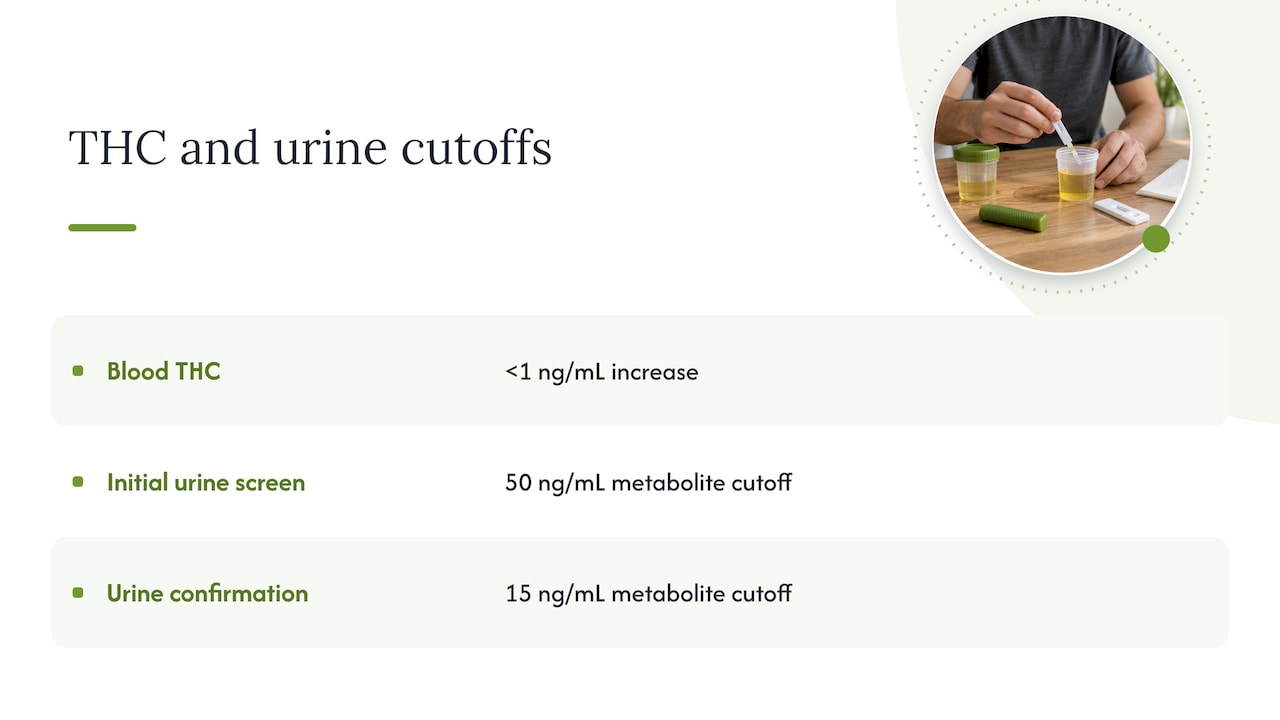
A systematic review of cannabis and exercise performance found that aerobic exercise caused only very small rises in THC concentrations, under 1 ng/mL. One media explainer on the topic points out that differences between studies may relate to how long they ran, and that rodents metabolize drugs faster than humans do, which matters when animal results get quoted as if they applied to people. You can read that discussion of cardio and drug tests for context.
Urine is what most employers test, and it barely moved
A 2014 Norwegian study asked the question that matters most to a job applicant. It tested whether exercise or food deprivation could release enough cannabinoids to affect drug testing in chronic cannabis users. Neither 45 minutes of moderate-intensity exercise nor 24 hours without food produced significant elevations in blood or urine cannabinoid levels sufficient to hamper the interpretation of drug testing programs.
Put the two studies side by side and they fit together. Exercise can move blood THC by a small amount. That is not the same as pushing a urine sample across a cutoff.
| Question | What the research shows |
|---|---|
| Does exercise release some THC from fat? | Yes, a small rise in plasma THC in regular users after 35 minutes of cycling |
| How big is the rise? | Very small in a systematic review of aerobic exercise, under 1 ng/mL |
| Does 45 minutes of moderate exercise change urine or blood enough to affect test interpretation? | No significant elevation in chronic users |
| Does exercise speed up how fast you eliminate THC? | No evidence that it does |
Why urine tests are hard to move with a workout
A standard urine screen does not look for THC itself. It looks for metabolites, mainly THC-COOH, which the body makes and excretes over time. A position statement from toxicologists notes that urine metabolite tests are designed only to detect the presence of drug metabolites. They do not tell timing of exposure, dose, or impairment. Our explainer on THC metabolites walks through what that means for you.
The cutoff is the second reason. Federally regulated DOT testing uses an initial cutoff of 50 ng/mL and a confirmatory cutoff of 15 ng/mL for marijuana metabolites. A sub-1 ng/mL wobble in blood THC is tiny next to numbers like these. A urine sample is also an accumulation of hours of metabolite production in your bladder, not a snapshot of the last 30 minutes.
If you are a frequent user, you are likely to be over the cutoff or under it based on your use pattern, not on whether you ran that morning. Our THC detox timeline and the guide to how long weed stays in urine show how the windows stretch from days for occasional use to weeks for daily use.
Does sweating or exercise “detox” THC?
No evidence supports it. The studies above looked for release of cannabinoids and found small blood changes at most, not a meaningful drop in the metabolites a lab measures. An Australian public information service says drugs leave the body through the body’s own metabolism and that nothing can speed up that natural process.
The practical reading is simple. A daily gym habit is good for you, but it is not a test strategy. If a test is days away, a plan built on sweating is a plan built on hope.
It also helps to know that a marijuana-positive result under the federal workplace program is hard to explain away. The HHS program’s medical review officers may not accept passive inhalation or ingestion of THC-containing edibles as an explanation for a positive result. So the cutoff decides, not the story around it.
Should you work out the day before a test?
Here is the sensible, low-regret approach for a urine test.
Do:
- Keep your normal routine. Walking, light jogging, stretching and an ordinary gym session are fine.
- Stay hydrated in a normal way, with water through the day when you are thirsty.
- Eat regular meals. The Norwegian study did not find that a 24-hour fast helped, so skipping food is not a tactic.
Skip:
- A brand-new, brutal training block in the 24 hours before collection. The research does not show it causes a failure, but it does not show a benefit either, and a small bump in blood THC is a reason to avoid gambling if your test is blood or oral-fluid based.
- Sauna suits, hot-weather runs and fluid loading to “flush” things out. Federal case guidance notes that a dilute specimen can lead to a negative-dilute result and a second collection, and that working in hot weather while drinking large amounts of fluid may be factors. A redo is a bigger problem than the workout was.
- Pre-workout supplements you have not checked. Read labels, and bring a list of anything you take to the collection site so the medical review officer can sort it out.
If you are worried about a diluted sample, read our guide to dilute urine drug tests. It explains the 20 mg/dL and 1.003 markers and what a recollection looks like.
What the research does not say about other tests
Most of the evidence above concerns blood and urine. Hair and saliva tests have different windows and different mechanics. Our guide to how specimens, cutoffs and program rules change detection times is the place to match your test type to your timeline. If a saliva swab or a roadside test is involved, the blood-based finding is the more relevant one: recent exercise may complicate how blood THC is read, so we would not schedule a hard session just before.
What actually moves your result
Since exercise is not the lever, here is what is.
- How often you use. Occasional use clears in days. Heavy daily use can take weeks, because of fat storage.
- Time. Abstinence is the only thing that reliably lowers metabolites. Count days from your last use, and look at the test date.
- Test type and cutoff. A 50 ng/mL screen and a 15 ng/mL confirmation, a lab-based test and a point-of-care cup are not the same. For the cup specifics, see our guides to urine specimen temperature and supervised urine collection.
- What the test is for. A job screen, a random test and a probation test follow different rules. See our pages on preemployment tests and probation drug testing.
- Products. Claims for drinks and quick fixes often rest on a single marker or on testimonials. Our look at detox drinks and why single-marker claims fail shows how labs catch many of them.
If you want a broader overview, start with our complete guide to passing a drug test.
Our perspective
We get this question a lot, and the honest answer is less dramatic than either camp wants. Exercise is not a detox, and it is not a trap. The measured effects are small, and the best-controlled urine work we know of found nothing that changes how a test is read.
What worries us more is the way anxious readers act on rumor. People fast, sweat in saunas, or chug water the day before a test, and then land a dilute result that forces a second collection under closer watch. A normal day does you less harm than any of that.

We also think readers deserve the line between documented practice and product claims. A study in 35 minutes of cycling is documented. A forum post saying a workout made someone fail is a personal report, with no way to know what else was going on, including how heavily they use. When we write about testing, we try to show which one we are citing.
Our advice is the same each time: learn the specimen, learn the cutoff, count the days, and keep your routine steady. If the numbers say you are not clear, no workout will change that, and it is better to know early and talk to the program or employer about your options.
— MIchael
Where our membership fits
NursingScience.org is a professional community for nurse scientists, educators and students, and the drug-testing guides here are part of the educational content we publish. If you work in or study nursing, healthcare or research, membership gives you access to the resources, events and job board behind the site. The student rate (undergraduate, master’s and pre-doctoral) is 40 USD per year, and NSNA members get a discounted rate of 36 USD per year.

You can see every option on our membership page.
FAQ
Does exercise get drugs out of your system quicker?
No. Drugs leave the body through metabolism and excretion, and exercise has not been shown to speed that up. A public information service on drug testing says nothing can speed up natural metabolism. The only dependable change is time without use.
Does exercise release THC?
A little. In regular users, a 35-minute bike session raised plasma THC slightly, probably from fat stores. A review of aerobic exercise put the rises at under 1 ng/mL, and the urine study found no change big enough to affect test interpretation.
What not to do before a urine drug test?
Don’t drink huge amounts of water, fast, or sweat heavily in hot conditions to try to flush your system. Those habits raise the odds of a dilute sample and a second collection. Keep your normal routine, take your usual medications, and tell the collector about prescriptions.
Will a pre-workout supplement affect a drug test?
We have no study showing that a standard pre-workout causes a THC positive. Supplements are loosely regulated, though, so read the label and bring a list of everything you take. If a result is ever questioned, that list helps the medical review officer.
Should I skip the gym entirely before a test?
You do not need to. Light to moderate activity is fine, and the study of 45 minutes of moderate exercise found no meaningful urine or blood change. Just avoid a punishing session in the last 24 hours, especially if the test could be blood or oral fluid.
Sources
- Exercise increases plasma THC concentrations in regular cannabis users (PubMed)
- Cannabis: Exercise performance and sport, a systematic review (PubMed)
- Can Physical Exercise or Food Deprivation Cause Release of Cannabinoids? (PMC)
- ACMT Position Statement: Interpretation of Urine for Cannabinoids (PMC)
- DOT Rule 49 CFR Part 40, Section 40.85
- 2024 Medical Review Officer Case Studies, Urine (SAMHSA)
- Drug Testing FAQs (Drug Aware)
- Can your cardio sabotage efforts to pass a drug test? (Leafly)
Recommended
- Cannabis (THC): How It Stores in Fat and Ways to Flush It Faster
- THC Metabolites: Tests Show Exposure, Not Current Impairment
- Best Detox Drinks for THC Drug Tests: A Comprehensive Guide
- Hours to 90 Days: THC Detox Timeline and 2026 Federal Cutoffs
|
The Council for the Advancement of Nursing Science |
   |