Most probation drug tests begin with a urine immunoassay screen, and a lab GC/MS confirmation is the accepted standard for contested positives. If you are on probation, the practical move is simple: disclose any lawful prescriptions before you test, and if a result comes back positive and you believe it is wrong, ask your probation officer about confirmatory testing in writing.
TL;DR:
- Probation drug tests primarily use a rapid urine immunoassay followed by GC/MS confirmation if results are contested or positive.
- Other specimen types like saliva, hair, sweat patches, and breathalyzers are used based on supervision conditions and substance history.
- Detection windows vary by substance and specimen type, with heavy or ongoing use resulting in longer detection times, especially in hair testing.
- Labs flag diluted or adulterated samples through specific markers, making dilution or tampering attempts risky and often detectable.
- Disclosing prescriptions beforehand and requesting confirmatory testing immediately can help contest false positives effectively.
Table of Contents
- What kinds of tests do probation departments use?
- How is probation drug testing actually conducted?
- How long do drugs stay detectable, and what changes that window?
- Why do diluted or altered samples still get flagged?
- What happens after a positive test result?
- How do you contest or confirm a disputed result?
- How does testing fit into supervision and treatment, not just enforcement?
- What does the evidence say about detox products and methods?
- A practical word on handling your next test
- Where to find deeper guides on testing and preparation
- FAQ
- Sources
What kinds of tests do probation departments use?
Probation agencies rely on a layered system rather than a single test. The first layer is almost always a rapid urine immunoassay, often called a point-of-care or instant test, because it delivers results in minutes and costs far less than lab analysis. These screens work by detecting antibody reactions to drug metabolites, which makes them fast but also prone to false positives from cross-reactivity with over-the-counter medications or certain prescriptions, according to clinical literature on immunoassay testing.
When an immunoassay comes back positive and the result is contested, or when a program requires it as policy, the sample goes to a laboratory for confirmation using gas chromatography-mass spectrometry (GC/MS) or liquid chromatography-mass spectrometry (LC/MS). These methods identify the exact molecular structure of a substance rather than just an antibody reaction, which is why federal probation guidance treats GC/MS as the method that resolves disputes.
Beyond urine, probation programs use several other specimen types depending on what they need to measure:
- Saliva swabs detect very recent use, usually within the past day or two, and work well for spot checks because collection is quick and hard to tamper with.
- Hair testing captures a longer history of use, often several months, making it useful for programs that want a broader pattern rather than a single moment.
- Sweat patches stay on the skin for days or weeks and provide continuous monitoring between office visits, a method federal probation guidance recognizes as an approved alternative to repeated urine collection.
- Breathalyzers measure alcohol specifically and are standard for conditions that prohibit drinking, since alcohol clears the body too quickly for urine testing to catch reliably.
Which combination you encounter depends on your specific conditions of supervision, the substance history in your case, and the agency’s budget and policy. A person with an alcohol-related offense might face daily breath testing alongside periodic urine checks, while someone with a longer substance use history might be placed on a sweat patch or more frequent hair testing.
How is probation drug testing actually conducted?
Testing is built around three things: an unpredictable schedule, a controlled collection process, and paperwork that protects the integrity of the sample. Here is what the process generally looks like.
- Notification system. Many programs use a call-in or color-code system where you phone a hotline or check a website daily to see if your group has been selected. “Random” in practice means the agency controls the selection method, and genuine randomness is what gives the program legal defensibility, a point emphasized in APPA and OJP drug-testing guidelines.
- Supervised collection. For urine tests, a same-sex observer typically watches or listens during collection to prevent substitution, and the sample’s temperature is checked within a narrow window immediately after collection.
- Chain-of-custody documentation. Every sample is logged, sealed, and labeled the moment it is collected, with signatures tracking who handled it until it reaches the lab. This paperwork is what makes a positive result legally usable if your case goes before a judge.
- Payment. Many probation departments charge a per-test fee, and you are generally expected to pay at the time of testing; missed payments can themselves become a compliance issue separate from the test result.
- No-shows and “stalls.” Failing to appear for a scheduled test, or being unable to produce a sample within the allotted time (a “dry run” or stall), is frequently treated the same as a positive result, since it is read as an attempt to avoid detection.
These procedural steps exist for a reason beyond catching violations. Observed collection and temperature checks protect you too, because they create a documented record that the sample tested was actually yours and was not tampered with in transit.
How long do drugs stay detectable, and what changes that window?
Detection windows vary by specimen type and by the substance itself, and no single number applies to everyone. In urine, the most common testing medium, single-use detection generally runs shorter than detection after regular or heavy use. THC can be detectable for a few days after occasional use but considerably longer after regular use, since it accumulates in fat tissue. Cocaine and its metabolites typically clear within a few days. Opiates and amphetamines often fall in a similar short window, while benzodiazepines and some formulations can linger longer depending on the specific drug. Fentanyl’s detection window on a standard panel depends heavily on whether the test specifically screens for it, since many basic opiate panels do not.
Hair testing works on a different timescale entirely, commonly reflecting a longer history of use measured in months rather than days, which is why agencies use it when they want a broader behavioral pattern instead of a single recent event. Saliva sits at the opposite end, generally picking up only very recent use. Sweat patches are designed for continuous monitoring, registering exposure throughout the entire period the patch is worn rather than a single snapshot.
A positive urine screen for an initial immunoassay test must be confirmed by GC/MS or an equivalent laboratory method in federal probation programs when the result is contested, according to federal probation guidance. That single procedural fact is the most important thing to remember if you ever dispute a result.
Several individual factors shift these windows beyond the general ranges above:
- Frequency and duration of use matters more than almost any other factor, since chronic users build up stores of metabolites that take longer to clear.
- Body composition affects THC specifically, since it is stored in fat and released gradually.
- Metabolism and hydration change how quickly a person’s system processes and excretes metabolites, though extreme hydration can itself trigger a dilution flag.
- Test cutoff levels set by the lab determine how sensitive the screen is, meaning the same urine sample could test negative on one program’s cutoff and positive on a stricter one.
Because these factors interact, nobody can give you an exact number of days and be right for every person. Treat ranges as planning information, not guarantees.
Why do diluted or altered samples still get flagged?
Laboratories do not just look for drug metabolites. They run specimen validity tests designed specifically to catch tampering, and these checks are often what triggers trouble even when no drug is found.
The core validity markers are specific gravity, creatinine, and temperature. Specific gravity below roughly 1.010 is commonly treated as a sign of dilution, a threshold research on urine tampering identifies as a standard flag point. Labs pair this with creatinine measurement, since creatinine levels drop in genuinely dilute urine but stay relatively stable if someone just drank a lot of water without actually flushing their system. Temperature is checked within minutes of collection, generally expected to fall within a narrow range of normal body temperature, and a sample outside that range raises immediate suspicion of substitution. Many labs also run adulterant strips that detect bleach, nitrites, or other common additives sold as “cleansing” products.
- Excessive water loading before a test often produces a visibly diluted sample with abnormal specific gravity and creatinine, which many programs treat as a violation in itself.
- Substituted or synthetic urine is frequently caught by temperature checks alone, since it cools or warms outside the expected range within minutes.
- Adulterants such as bleach or commercial additives leave chemical signatures that validity strips are specifically designed to catch.
Detox drinks, detox shampoos, and methods like the Macujo Method are marketed around the idea of beating these exact checks, and the evidence for their reliability is thin at best. NursingScience.org’s own evaluations of detox drinks and home remedies like Certo walk through why these products struggle against modern validity testing specifically because labs are built to catch the exact signs dilution leaves behind.
Pro Tip: If you are worried about a legitimate medication triggering a false positive, bring your prescription bottle or a pharmacy printout to the testing appointment rather than trying to explain it after the fact.
What happens after a positive test result?
Agencies generally move quickly once a positive is confirmed. Many probation departments contact the person within days of receiving a confirmed result, both to document the finding and to begin whatever response the case plan calls for. What happens next depends heavily on local policy, your supervision history, and the specific conditions of your probation.
Most programs use a graduated sanctions model rather than jumping straight to revocation. A first positive, especially for someone otherwise in compliance, often results in an increase in testing frequency, a referral to treatment, or a short administrative sanction like community service. Repeated positives, combined with other violations or missed appointments, are what typically push a case toward harsher responses, including possible revocation hearings.
- First-time or isolated positives frequently trigger increased monitoring or a treatment referral rather than immediate punishment.
- Patterns of use alongside other violations are what most often escalate a case toward a revocation hearing.
- Honesty and documentation (disclosing use proactively, attending any required assessment) tend to influence how much discretion an officer or judge exercises.
National guidance increasingly favors the treatment-first approach for appropriate cases. NIDA frames drug testing as a clinical management tool rather than a purely punitive mechanism, recommending that a positive result prompt an adjustment in treatment intensity, such as adding a counseling modality or increasing session frequency, before incarceration becomes the default response. That does not mean consequences disappear, but it does mean the system is increasingly built to ask what level of clinical support is missing before it asks how to punish.
How do you contest or confirm a disputed result?
If you believe a positive result is wrong, whether because of a prescription, a cross-reactive substance, or a lab error, there is a process for pushing back, and timing matters.
- Request confirmatory testing immediately. Initial immunoassay screens are presumptive, and federal statute sets expectations around confirmation standards for contested results in federal supervision; many state and county programs follow similar practices. Ask your probation officer, in writing, whether the sample will be or has been sent for GC/MS confirmation.
- Ask about the medical review officer. Many testing programs route disputed results through a medical review officer, a role specifically designed to reconcile a positive test with a legitimate prescription or medical explanation before the result is finalized, a safeguard NIDA’s clinician guidance points to directly.
- Request preservation of the original sample. A saved primary specimen is often what allows reanalysis if the first confirmation is also disputed.
- Gather documentation fast. Pharmacy records, a doctor’s note, or treatment program paperwork carries far more weight when submitted within days of the result than weeks later.
Acting quickly is the common thread across all four steps. Confirmatory testing has a window, and samples are not held indefinitely, so delay can close off your ability to dispute a result at all.
How does testing fit into supervision and treatment, not just enforcement?
Modern probation policy treats drug testing as one input into a broader supervision and treatment plan, not an isolated checkpoint. APPA and OJP guidelines recommend that agencies maintain clear written testing policies, consistent chain-of-custody procedures, and specimen validity checks, specifically because consistency is what makes a program both effective and legally defensible.
- Contingency management, which rewards negative tests and consistent compliance rather than only punishing positives, is one strategy guidance documents point to as effective supervision practice.
- Graduated sanctions give officers a middle ground between ignoring a positive and seeking revocation, matching the response to the severity and pattern of the violation.
- Unscheduled testing combined with written policy is what APPA materials identify as the combination that best supports defensible, consistent programs.
NIDA’s federal guidance reinforces this by framing testing primarily as a monitoring and treatment tool. A positive result, in this framing, is information that should prompt a clinical response first, whether that means more frequent counseling, a higher level of care, or a medication-assisted treatment referral, with punitive escalation reserved for patterns that do not respond to those adjustments.
What does the evidence say about detox products and methods?
Detox drinks, detox shampoos, and multi-step regimens like the Macujo Method are built around beating the specific validity checks described earlier, and that is exactly why labs are designed to catch them. Dilution-based products run into the same specific gravity and creatinine thresholds that flag ordinary water loading, and many labs now treat an oddly perfect or oddly diluted sample as cause for an immediate observed retest rather than a pass.
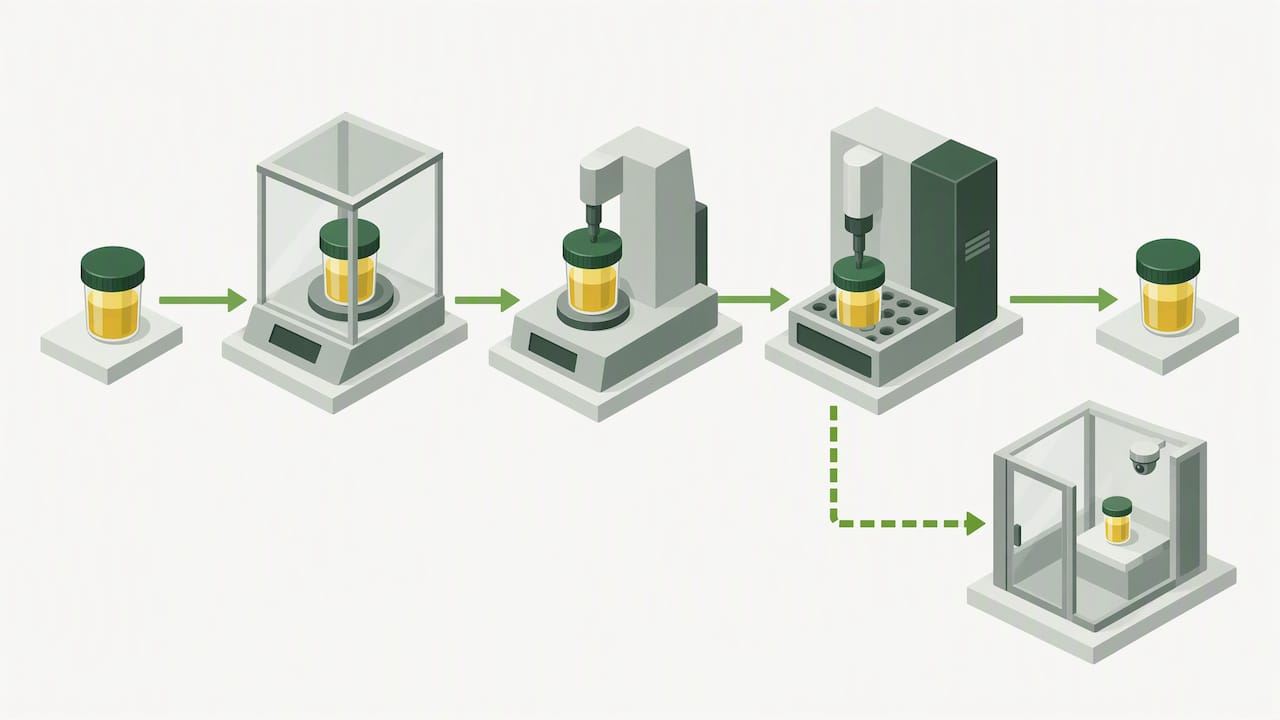
NursingScience.org’s evaluations of detox drinks, the Macujo Method and hair-test workarounds, and home remedies such as Certo consistently find thin evidence behind the strongest claims, alongside real risks: extreme water or electrolyte loading can cause health problems on its own, and a sample flagged as substituted or adulterated is often treated as a probation violation in its own right, independent of any drug result.
Pro Tip: If you have a legitimate reason to worry about an upcoming test, the lower-risk path is disclosure and documentation, not a product bought the night before.
A practical word on handling your next test
If you are facing a probation drug test, the fastest way to protect yourself is boring but effective: tell your probation officer about any prescriptions before you test, not after a positive shows up. Keep copies of pharmacy printouts or a doctor’s note somewhere you can grab them quickly. If a result does come back positive and you believe it is wrong, ask for confirmatory testing in writing the same day, and ask whether a medical review officer will be involved.
Testing exists to manage risk, but it can also be the thing that gets you into treatment sooner rather than later. Agencies increasingly treat a positive as a signal to adjust support, not just a reason to punish, and leaning into that process, rather than fighting it in silence, tends to produce better outcomes for the people going through it.
— MIchael
Where to find deeper guides on testing and preparation
NursingScience.org’s drug-testing content area goes further into the specific mechanics covered here, with dedicated breakdowns for readers who want more detail before a specific type of test.
- The supervised drug test guide for female probationers covers observed collection procedures in detail.
- The guide to passing a drug test lays out an evidence-focused look at preparation claims.
- The hair-test methods guide breaks down detection windows and common workaround claims for hair testing specifically.
Readers who want ongoing access to clinically grounded explainers, along with the broader research and policy content NursingScience.org publishes for nursing professionals, can look into membership options, including a discounted rate for students.
This article is general information, not a substitute for advice from a qualified doctor. Consult a qualified healthcare professional about your own circumstances before acting on anything here.
FAQ
What kind of drug test do they give you on probation?
Most probation programs start with a urine immunoassay screen because it is fast and low-cost, with GC/MS lab confirmation used when an initial positive is contested. Some programs add saliva swabs, hair tests, sweat patches, or breathalyzers depending on the specific conditions of supervision.
How long will alcohol show up in a urine test for probation?
Standard urine alcohol testing detects recent drinking, generally within a short window of hours, since alcohol clears the body quickly compared to other substances. Programs that need to monitor alcohol more closely often rely on breathalyzers or specialized metabolite tests rather than standard urine screens alone.
How long do I need to be clean to pass a urine drug test?
There is no single safe number of days, since detection time depends on the substance, how often and how much was used, and individual metabolism and body composition. Single-use detection windows are generally shorter than those following regular or heavy use, and lab cutoff levels can shift the result either way.
What are the cut-off levels for probation drug testing?
Cutoff levels vary by substance and by the specific lab or program, since they are set to balance sensitivity against false positives. Validity testing cutoffs are more standardized, with a specific gravity below roughly 1.010 commonly flagged as a sign of diluted urine.
Sources
- How substance use testing and treatment work — US Courts
- Drug testing — National Institute on Drug Abuse (NIDA)
- Drug testing guidelines and practices for adult probation and parole agencies — APPA / OJP
- Immunoassay cross-reactivity and confirmatory testing — PMC article
- 18 U.S.C. § 3563 — Conditions of probation — Cornell Law
Recommended
- Supervised Drug Tests for Females – Best Guide
- How to Pass a Drug Test: A Complete and Detailed Guide
- How to Pass a Hair Drug Test? Tested Method and Products
|
The Council for the Advancement of Nursing Science |
   |