Most drug tests look for THC-COOH, the main inactive breakdown product of THC, along with its active intermediate 11-OH-THC. Detection windows depend on the test: urine can stay positive for days to several weeks with heavy use, blood for hours to a few days, saliva commonly detects use within hours up to a few days, and hair for about 90 days. These tests confirm exposure, not whether someone is currently impaired.
TL;DR:
- Urine detection can last days after single use, one to two weeks after occasional use, and several weeks after chronic heavy use.
- Blood and saliva usually detect recent use for hours to days; hair can detect exposure for about 90 days, though treatments may affect results.
- Urine screens commonly use a 50 ng/mL cutoff, while confirmatory testing applies a lower threshold of about 15 ng/mL and verifies the exact compound.
- Repeated use, higher body fat, reduced CYP2C9 activity, and interacting medications can extend detection, while fasting or intense exercise may briefly raise blood THC.
- If a positive result carries employment or legal consequences, request laboratory mass spectrometry confirmation and preserve chain of custody records.
Table of Contents
- How the Body Processes THC After You Use It
- Key THC Metabolites: What Labs Actually Measure
- Detection Windows by Test Type: Urine, Blood, Saliva, and Hair
- What Changes Your Detection Time
- How Labs Confirm a Positive Result
- Separating Lab Science From Detox Claims
- What Matters Most When You’re Facing a Test
- Where to Go Next for Detailed Testing Guidance
- FAQ
- Sources
How the Body Processes THC After You Use It
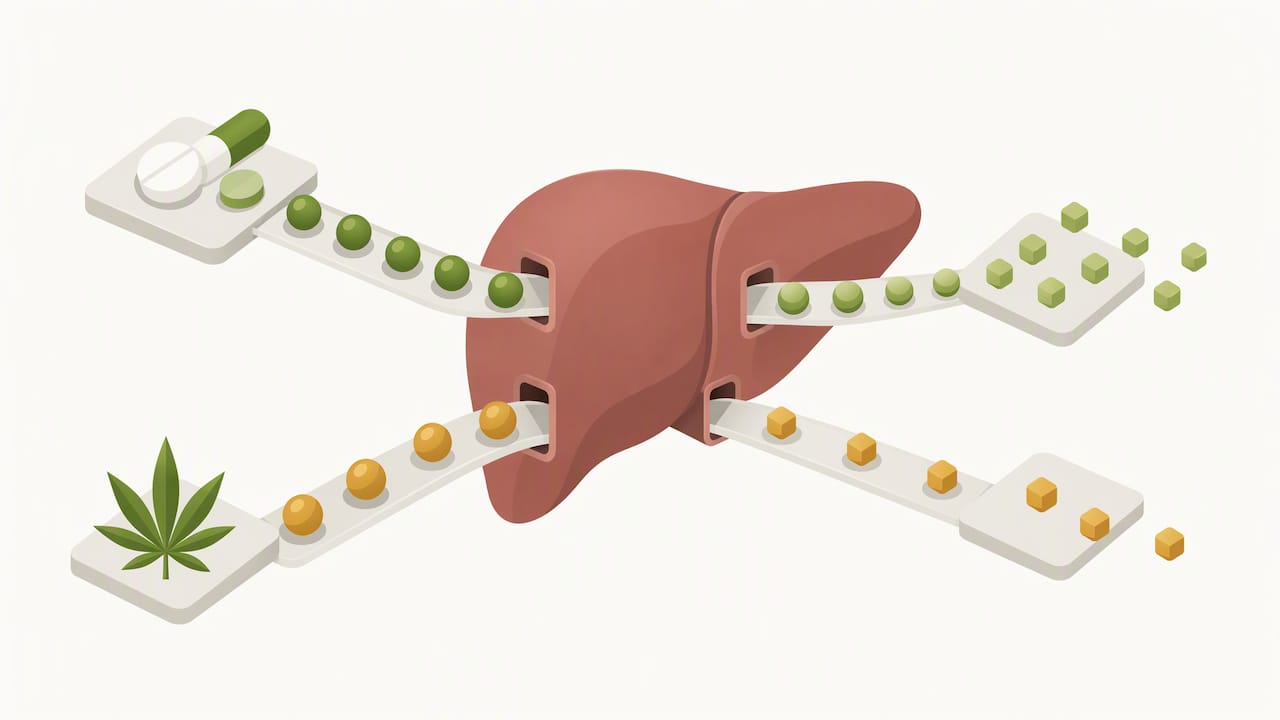
What happens after use depends heavily on how THC enters the body. Smoking or vaping sends THC into the bloodstream within minutes, while eating or drinking an edible delays absorption and pushes more of the dose through the liver first. That extra liver pass matters: oral THC produces proportionally more 11-OH-THC, the active metabolite responsible for much of the intensity some people report from edibles.
Once absorbed, THC moves fast. It reaches the brain within minutes and then redistributes into fat tissue, where its lipophilic structure lets it linger. Adipose tissue acts as a slow-release reservoir, which is part of why chronic users can test positive long after their last session.
Metabolism happens in two phases:
- Phase I: liver enzymes, mainly CYP2C9, convert THC into 11-OH-THC.
- Phase II: 11-OH-THC oxidizes further into THC-COOH, which then gets glucuronidated, a chemical tagging process that makes it water-soluble enough for the kidneys to excrete.
Genetic variation in CYP2C9, along with interacting medications, can slow this pathway and extend how long active metabolites circulate, according to clinical guidance on CYP2C9 genotype.
Pro Tip: If you take medications metabolized by CYP2C9 or CYP3A4, clearance timing can shift in either direction, so generic detection-window estimates fit you less precisely.
Key THC Metabolites: What Labs Actually Measure
Three metabolites matter most for understanding test results.
- 11-OH-THC: the first breakdown product, still psychoactive, and the reason oral THC can feel stronger than smoking an equivalent dose.
- THC-COOH (11-nor-9-carboxy-THC): the inactive metabolite that urine tests primarily target because it has a longer half-life and accumulates with repeated use.
- Glucuronide conjugates: the water-soluble tags attached to THC-COOH that allow kidney excretion; researchers can now identify these conjugates directly in urine and serum.
Newer research has also flagged metabolites like HHC-COOH and 11-OH-HHC, found at low relative concentrations in forensic samples. These emerging metabolites complicate interpretation across different lab assays, since not every method screens for them equally.
Detection Windows by Test Type: Urine, Blood, Saliva, and Hair
Each specimen type measures a different analyte and reflects a different window of exposure.
- Urine targets THC-COOH. A single use often clears in a few days, occasional use within one to two weeks, and chronic heavy use can remain detectable for several weeks.
- Blood measures parent THC and 11-OH-THC directly, reflecting recent use over hours to a few days, which makes it more relevant in clinical or forensic settings tied to impairment.
- Saliva also tracks recent use, typically detectable from a few hours up to one to three days, making it useful for roadside or workplace checks focused on recency rather than history.
- Hair incorporates metabolites into the hair shaft as it grows, giving a detection window of roughly 90 days, though results can be affected by hair treatments and where along the strand the sample is cut.
Initial immunoassay screens commonly use a 50 ng/mL cutoff for THC-COOH, while confirmatory testing applies a lower threshold around 15 ng/mL. That gap exists because screening assays are fast but less specific, while confirmatory methods verify the exact compound and concentration before a result is reported as positive.
What Changes Your Detection Time
Several variables explain why two people with similar use patterns can get very different results.
- Usage frequency: single use clears faster than daily or near-daily use, since repeated dosing lets THC accumulate in fat stores.
- Body fat percentage: higher fat mass gives THC more reservoir space, and sudden fat breakdown from fasting or intense exercise can transiently push stored THC back into the bloodstream.
- Metabolic rate and genetics: people with reduced CYP2C9 activity process THC more slowly, extending exposure to active metabolites.
- Drug interactions: medications competing for the same liver enzymes can slow clearance further.
- Testing program design: the cutoff level, specimen type, and whether collection is supervised all shape whether a borderline case reports positive or negative.
Pro Tip: Weight loss right before a test can temporarily raise blood THC levels rather than lower them, so timing matters more than last-minute effort.
How Labs Confirm a Positive Result
Workplace and clinical testing typically happens in two steps. The first is an immunoassay screen, a quick chemical test that flags samples above a set cutoff, commonly 50 ng/mL for urine THC-COOH. Anything above that threshold moves to confirmatory testing using gas chromatography-mass spectrometry (GC-MS) or liquid chromatography-mass spectrometry (LC-MS), which identifies the exact molecule and its concentration.
- Urine confirmation focuses on THC-COOH because of its longer half-life and higher post-use concentration.
- Blood and saliva confirmation focus on parent THC and 11-OH-THC, since those better reflect recent use.
- False positives at standard cutoffs are uncommon from passive secondhand exposure alone; most documented cases involve cross-reacting substances rather than secondhand smoke.
- If results carry legal or employment consequences, requesting GC-MS or LC-MS confirmation, maintaining chain-of-custody documentation, and consulting a medical review officer are reasonable, standard steps.
Separating Lab Science From Detox Claims
Clinical literature on THC pharmacokinetics is well established, but claims made for detox drinks, specialty shampoos, and home remedies often come from marketing rather than controlled testing. We think it is worth drawing that line clearly before anyone bases a decision on a product label.
- Our cannabis storage and fat guide covers how THC accumulates in adipose tissue and what the evidence says about speeding clearance.
- Our THC detox timeline guide breaks down expected windows against current federal cutoffs.
- Our hair testing guide explains the practical limits of hair assays, including cosmetic interference.
| Step | What it covers |
|---|---|
| Document last use | Establishes your starting point for any detection estimate |
| Identify test type | Urine, blood, saliva, and hair each measure different analytes |
| Request GC-MS if positive | Confirms results before they carry legal or job consequences |
| Consult guides or a clinician | Matters most for high-stakes legal or medical situations |
What Matters Most When You’re Facing a Test
The core answer stays simple: know which test you are facing, since urine, blood, saliva, and hair each measure something different with its own timeline. Document your last use, request GC-MS confirmation if a result seems wrong, and consult a clinician or legal counsel when the stakes are high.
— MIchael
Where to Go Next for Detailed Testing Guidance

We publish in-depth breakdowns most general explainers skip, including federal cutoff tables and step-by-step confirmation requests. Our membership gives ongoing access to these detailed guides as we add them.
This article is general information, not a substitute for advice from a qualified doctor. Consult a qualified healthcare professional about your own circumstances before acting on anything here.
FAQ
Does THC Stick to Fat Cells?
Yes. THC is lipophilic, meaning it dissolves readily into fat rather than water, so it accumulates in adipose tissue after absorption. This storage is why chronic users can test positive weeks after stopping, since fat releases THC back into the bloodstream gradually.
Will 0.3% THC Show in a Urine Test?
Products with THC concentrations around 0.3% can still trigger a positive result, since even small repeated doses contribute to the THC-COOH that urine tests detect. The percentage describes potency, not whether metabolites will clear the screening cutoff, so frequency and amount of use matter more than that single number.
Does Losing Weight Help Remove THC?
Not reliably, and it can backfire in the short term. Rapid fat breakdown from fasting or intense exercise can release stored THC back into the blood, temporarily raising levels rather than lowering them, based on research on lipolysis.
How Long Do THC Metabolites Stay in Urine?
It depends on use frequency: a single use often clears within a few days, occasional use within one to two weeks, and chronic heavy use can remain detectable for several weeks. Urine tests primarily measure THC-COOH, the inactive metabolite with the longest detectable presence.
Sources
Recommended
- Cannabis (THC): How It Stores in Fat and Ways to Flush It Faster
- Hours to 90 Days: THC Detox Timeline and 2026 Federal Cutoffs
- Best Detox Drinks for THC Drug Tests: A Comprehensive Guide
- Specimen, Cutoffs, and Program Rules Change Drug Detection Times
|
The Council for the Advancement of Nursing Science |
   |