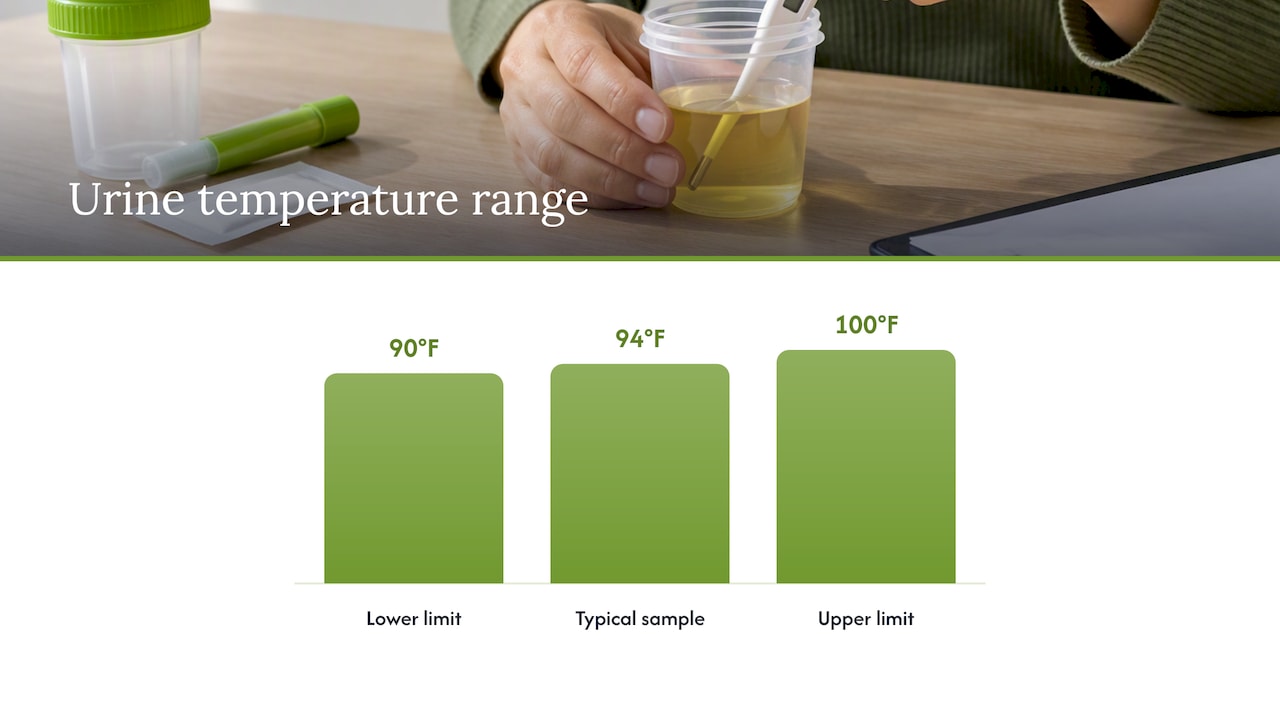
Yes, urine temperature is checked during most regulated drug tests, and the accepted range is commonly 90 to 100°F (32 to 38°C). This check confirms the specimen is fresh and likely came directly from the donor, not that drugs are present. A reading outside that window typically triggers documentation and, in many cases, an immediate recollection.
TL;DR:
- Urine temperature must be checked within four minutes of collection to accurately reflect freshness, with a valid range of 90 to 100°F.
- A reading outside this range triggers a second collection under observation, not a drug-positive result, to verify specimen integrity.
- Factors like room temperature and collection delay can cause legitimate samples to fall outside the acceptable temperature window.
- Temperature alone does not confirm drug use, as labs verify specimens with additional chemical and volume tests.
- Attempting to manipulate urine temperature with synthetic products or warming devices risks detection and invalidation of the sample.
Table of Contents
- The accepted temperature range and why timing matters
- How collectors measure temperature at the collection site
- What happens when a specimen reads outside the acceptable range
- How fast urine cools and what donors can reasonably check
- Common myths about temperature, synthetic urine, and warming tricks
- Why trust this guidance on urine drug test temperature
- What to expect walking into a collection appointment
- Resources for deeper preparation and professional support
- FAQ
- Sources
The accepted temperature range and why timing matters
The 90 to 100°F (32 to 38°C) window written into 49 CFR § 40.65 exists because fresh urine leaves the body close to normal body temperature and cools predictably afterward. Collectors read the temperature strip attached to the collection cup, and under DOT-regulated procedures, that reading has to happen within four minutes of the donor handing over the specimen.
The four-minute window is not arbitrary. The closer the reading happens to the moment of voiding, the more the result actually reflects whether the sample is genuinely fresh. A delay lets a legitimate sample cool past the threshold, which can create a false flag on an otherwise valid specimen.
- The accepted range is 90 to 100°F, or 32 to 38°C.
- Collectors must read the strip within four minutes of the donor providing the specimen.
- A temperature check confirms freshness, not drug content.
One number worth remembering: a specimen read at 94°F falls comfortably within the 90 to 100°F window used in DOT-regulated testing, while anything outside that range gets flagged for further steps.
It helps to separate what temperature measures from what a drug test measures. Temperature is a validity check on the specimen itself. Identifying substances in the urine is a separate job handled by laboratory immunoassay screening and, when needed, confirmatory testing. A normal temperature reading says nothing about what the lab will eventually find.
How collectors measure temperature at the collection site
Every standard collection cup used in regulated testing comes with a built-in temperature strip along the side. The donor hands over the specimen, and collection site personnel, not the donor, read the strip and record the result.
- The strip displays a color-coded range that the collector checks against the cup within the allotted four minutes.
- Regulated collections also require a minimum specimen volume, commonly 45 mL, under procedures described in municipal code excerpts that mirror DOT requirements.
- The temperature result gets logged directly on the custody-and-control form (CCF) alongside the volume and collection time.
Donors are not permitted to interpret or report the strip reading themselves. Collection site personnel are the only authorized party to read and document it, which keeps the chain of custody intact and protects both the donor and the testing program from disputes later.
What happens when a specimen reads outside the acceptable range
When a reading falls outside 90 to 100°F, the collector does not simply note it and move on. Under DOT procedures for Part 40 collections, a defined sequence follows.
- The collector marks the out-of-range result on the CCF and writes a remark explaining the finding.
- A new collection begins immediately, typically under direct observation, or an oral-fluid collection is used instead.
- Both the original specimen and the replacement are sent to the laboratory for processing.
- The designated employer representative (DER) and relevant supervisors are notified of the temperature discrepancy.
None of this amounts to a positive drug result. It is a procedural safeguard that treats an unusual temperature as a question about specimen integrity, which then gets resolved through a second, more closely observed collection.
How fast urine cools and what donors can reasonably check
Urine loses heat quickly once it leaves the body. A cold restroom, a thin plastic cup, or a long gap between voiding and handing over the specimen can all push the reading toward the edges of the acceptable range within just a few minutes. Room temperature and the material of the collection container both play a role in how fast that drop happens.
There is not much a donor needs to do beyond following instructions. Hand the specimen to the collector promptly after providing it, since that is what keeps the reading meaningful in the first place.
- Avoid lingering in the restroom after providing the sample.
- Do not bring any device into the collection area that is not part of the standard process.
- Trust the collector’s strip reading rather than guessing based on how the cup feels.
Pro Tip: The single most reliable way to avoid a temperature flag is to provide the specimen as soon as you are able to and hand it over right away, since delay is the most common cause of an out-of-range reading.
Attempting to work around the process, through delay tactics or anything resembling substitution, carries real consequences, including a flagged test and possible disciplinary or legal fallout depending on the context of the testing program.
Common myths about temperature, synthetic urine, and warming tricks
A normal temperature reading does not prove a sample is unaltered. It is one data point among several that laboratories and specimen-validity testing use together, including creatinine levels, specific gravity, and pH. A specimen can land in the 90 to 100°F range and still raise questions if those other markers look abnormal.
- Temperature alone cannot confirm a specimen is drug-free; that determination comes from separate laboratory assays.
- Synthetic urine products marketed for warming often struggle to match the full profile labs check, not just the temperature.
- Warming tricks that rely on handheld devices or pads risk detection during direct observation and tend to produce inconsistent readings.
- Specimen-validity testing exists precisely because temperature by itself is an incomplete picture.
Collectors and labs are not relying on a single number. They are cross-checking temperature against volume, appearance, and chemical markers, which is why attempts to manipulate just one variable rarely hold up under a full validity review.
Why trust this guidance on urine drug test temperature
This guide was written by Michael for NursingScience.org, where our drug-testing content area focuses on documented collection procedures rather than anecdotal claims about beating a test. We draw a clear line between what regulations actually require and what product marketing suggests, which matters most when the stakes involve employment or legal outcomes.
For readers who want the fuller preparation picture beyond temperature specifics, our complete guide to passing a drug test walks through specimen validity and supervised collection in more depth. Readers researching other specimen types can also see how procedures differ in our guide to methods used in hair testing.
What to expect walking into a collection appointment
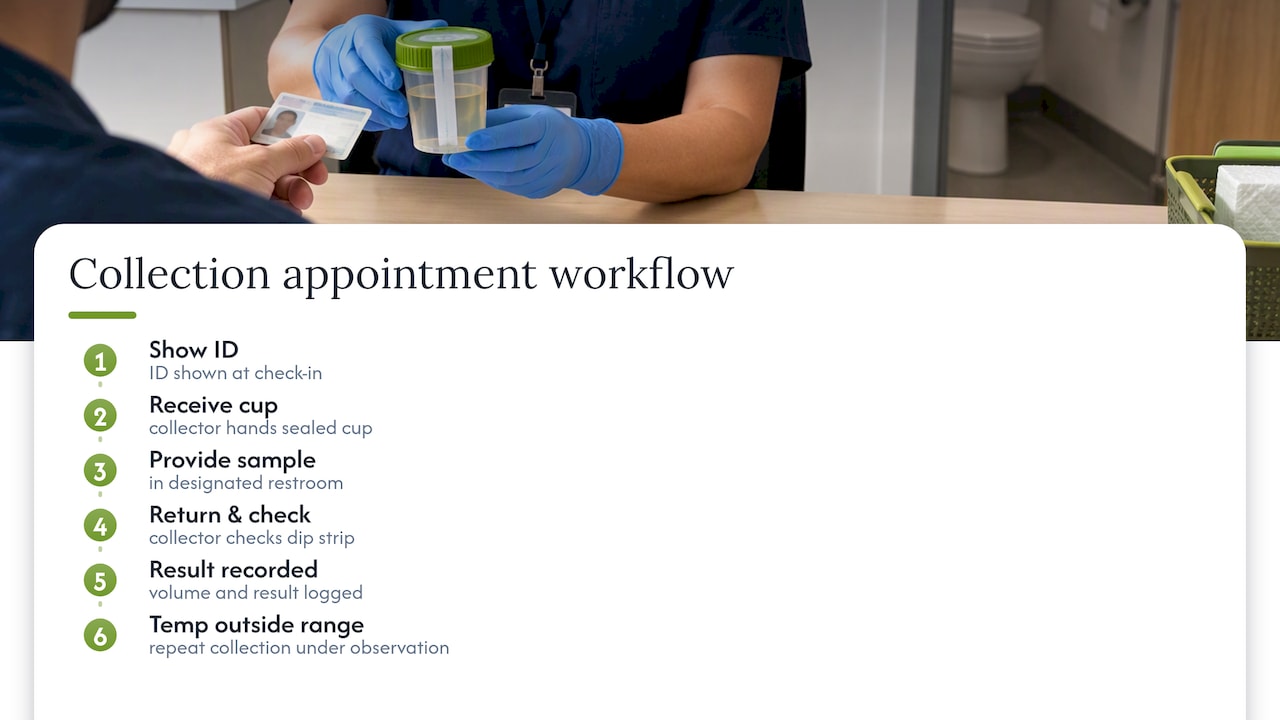
Walking into a collection site is usually straightforward: you show ID, get handed a cup, and provide the sample in a designated restroom. You hand it back right away, the collector checks the strip, and the result gets written down along with the volume.
If the temperature happens to fall outside range, that just means a second collection under closer observation, not an automatic negative mark against you. Bring your ID, follow the collector’s instructions, and the process moves quickly.
— MIchael
Resources for deeper preparation and professional support
For readers who want supervised-collection details or ongoing access to our drug-testing guides, our membership resources connect you to deeper materials year-round.

Beyond temperature specifics, our guide on supervised collection procedures for female donors covers what direct observation actually involves. If you are weighing a membership, our student-rate plan runs $40 per year and opens access to our fuller library of testing and preparation guides.
FAQ
How fast does pee temperature drop?
Urine cools quickly once outside the body, and factors like room temperature and the container’s material speed that drop. This is exactly why regulated collections require the temperature reading within four minutes of the donor providing the sample, before cooling can push a legitimate specimen out of range.
Is it normal for pee to be 100 degrees?
Yes, 100°F sits at the upper edge of the accepted 90 to 100°F range used in regulated urine collections. A reading at or just below that mark is considered a normal, in-range result.
Can I use a 2 hour old pee for a drug test?
A sample that old would almost certainly have cooled well below the accepted temperature window by the time it reaches a collector, since regulated collections require a reading within four minutes of voiding. An out-of-range reading on an old sample would likely trigger a new collection under direct observation rather than being accepted.
What is the best way to keep fake pee warm for a drug test?
We do not recommend attempting to use synthetic urine or warming devices, since collectors and laboratories cross-check temperature against other validity markers like creatinine, specific gravity, and pH, not temperature alone. Attempts at substitution carry real risks, including a flagged specimen and consequences tied to the employment or legal context of the test.
Sources
- 49 CFR § 40.65 – What are the requirements for collection and testing of urine specimens?
- DOT: 49 CFR Part 40 — Section 40.65 (Temperature)
- § 37.116 Drug testing procedures (municipal code excerpt)
Recommended
- How to Pass a Drug Test: A Complete and Detailed Guide
- Methods to Pass a Hair Drug Test
- Supervised Drug Tests for Females – Best Guide
|
The Council for the Advancement of Nursing Science |
   |