Activated charcoal is not a reliable way to beat a THC drug test, and the reason comes down to timing and chemistry. By the time most people think about using it, THC metabolites have already left the gut and settled into fat tissue, far out of charcoal’s reach. The mechanism below explains why, and what the research actually supports.
TL;DR:
- Charcoal works in the gut only when taken soon after ingestion, generally within about an hour; it cannot reach THC metabolites stored in fat.
- A lab study found 5 mg bound 1,000 ng/mL of THC metabolite in a test tube, but did not establish drug test effects.
- Charcoal cannot reach the targets of saliva or hair tests: saliva tests detect mouth residue, while hair tests detect metabolites embedded as hair grows.
- Because charcoal can reduce absorption of oral medicines, including birth control and antibiotics, ask a pharmacist before taking it if you use daily medication.
- For an upcoming test, stop cannabis use as early as possible; time, not charcoal, is the consistent factor in metabolite clearance.
Table of Contents
- How activated charcoal works: adsorption, timing, and its limits
- The evidence: what lab studies and clinical toxicology say
- Can it change results for urine, saliva, or hair tests?
- Safety, interactions, and risks of using activated charcoal as a “detox”
- Practical steps if you have an upcoming drug test
- Publisher perspective from a nursing-science resource
- Where to read more on NursingScience.org
- FAQ
- Sources
How activated charcoal works: adsorption, timing, and its limits
Activated charcoal works by binding chemicals inside the gastrointestinal tract so they pass through the body instead of being absorbed. It does not travel into the bloodstream itself, and it cannot pull substances out of tissues once they’ve already been absorbed. According to a clinical overview on activated charcoal, the window for meaningful effect is narrow: it works best when given soon after a substance is swallowed, generally within about an hour.
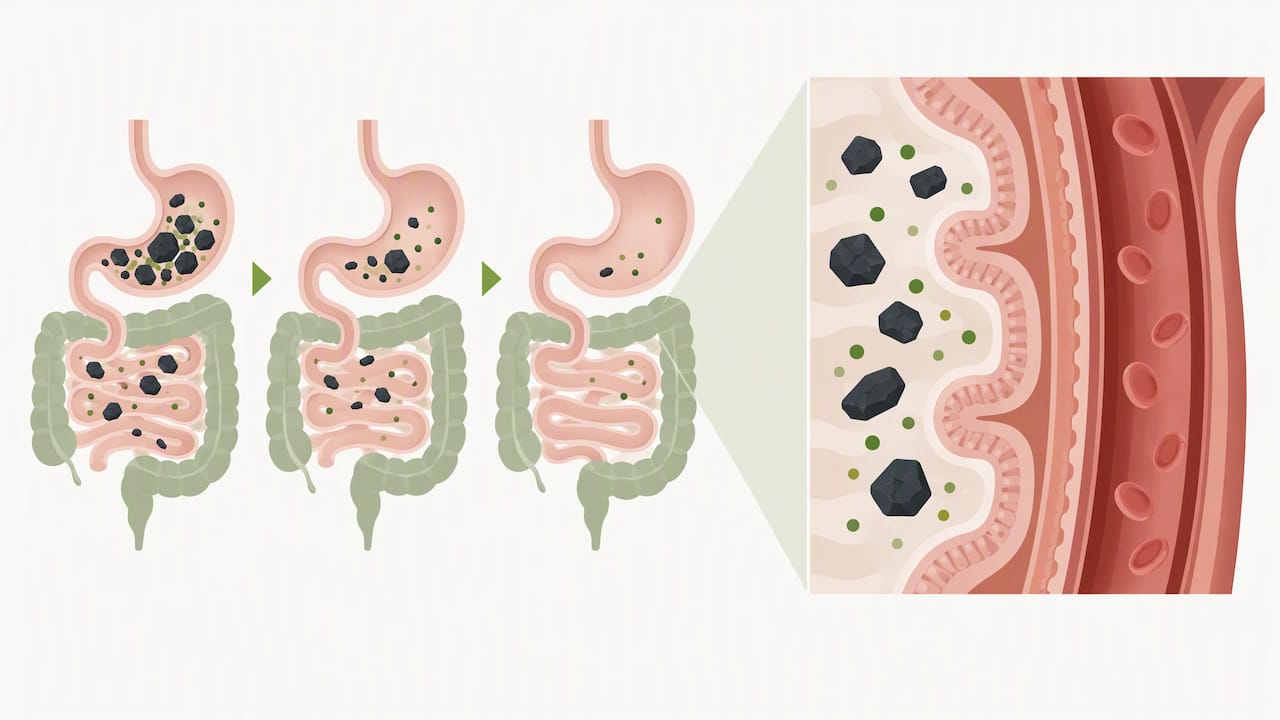
That timing matters enormously for THC. Once THC is absorbed, it’s metabolized by the liver and its byproducts, including THC-COOH, get stored in fat tissue and released slowly over days or weeks. By the time someone is scheduling a drug test, that process is long finished.
A few points explain why the gut-only mechanism falls short here:
- Charcoal binds substances in the gut lumen, not in blood or fat tissue.
- It’s only useful shortly after ingestion, not days or weeks later.
- THC metabolites recirculate through the liver and gut (enterohepatic recycling), but the amount affected by gut-level adsorption is small compared to what’s stored in fat.
- Chronic or heavy cannabis use means a large reservoir of stored THC metabolites that charcoal simply can’t access.
The evidence: what lab studies and clinical toxicology say
The idea that charcoal could affect a THC test isn’t baseless. A laboratory study on THC-COOH adsorption found that activated charcoal could adsorb THC-COOH and its glucuronide form almost completely under controlled test-tube conditions.
As little as 5 mg of activated charcoal fully adsorbed 1,000 ng/mL of THC-COOH in vitro, according to the same study, a result that demonstrates charcoal’s binding capacity in a lab setting, not inside a living body.
That distinction matters because clinical toxicology guidance treats activated charcoal very differently from how detox culture does. Key points from that guidance:
- Charcoal is indicated mainly for acute poisoning cases in emergency settings, not routine substance clearance.
- Multiple-dose regimens exist for specific toxins, but these are clinician-directed and monitored.
- No major toxicology body recommends charcoal as a way to influence drug-test outcomes.
In vitro adsorption happens in a test tube with concentrated analyte and direct charcoal contact, conditions nothing like the human gut, bloodstream, and fat tissue working together in real time. A lab result showing near-complete binding doesn’t translate into a predictable change on an actual drug-test report.
Can it change results for urine, saliva, or hair tests?
The answer depends on the test type, but it’s “unlikely” across the board, for different reasons.
- Urine tests detect THC metabolites that have already been processed and stored in fat by the time testing happens days or weeks after use; charcoal taken at that point has nothing left to adsorb. A theoretical effect would require taking charcoal within roughly an hour of ingesting THC orally, a scenario that has nothing to do with typical pre-employment or routine testing timelines.
- Oral fluid (saliva) tests detect THC residue in the mouth from recent smoking or vaping, with a detection window measured in hours to a couple of days. Charcoal swallowed after use doesn’t reach the mouth tissue where that residue sits, so it offers no plausible benefit.
- Hair tests detect THC metabolites incorporated into the hair shaft as it grows, sometimes reflecting use from months earlier. Nothing taken orally, including charcoal, can remove compounds already embedded in hair structure.
Readers researching detection windows in more detail can see how these timelines actually play out in our THC detox timeline guide, which breaks down urine, saliva, and hair windows alongside current federal cutoffs.
Safety, interactions, and risks of using activated charcoal as a “detox”
Activated charcoal is a real medical tool, but it’s not harmless when used casually or in high doses outside clinical supervision. Common and rare effects to know about:
- Constipation, black-colored stool, and nausea are common after charcoal use.
- Aspiration into the lungs and bowel obstruction are rare but serious risks, particularly with repeated dosing.
- Charcoal is non-selective, meaning it can also bind and reduce the effectiveness of oral medications, including birth control, antibiotics, and other prescriptions.
- Over-the-counter activated charcoal supplements are not intended for routine or repeated use, and side effects can appear even at standard doses.
Pro Tip: If you take any daily medication, including birth control, talk to a pharmacist before using any charcoal product, since timing it too close to a dose can blunt the medication’s effect.
Emergency-room use of activated charcoal is always clinician-directed, with dosing based on the specific substance and timing of ingestion. Taking large, repeated, unsupervised doses to try to influence a drug test carries real health risk without a documented benefit to match it.
Practical steps if you have an upcoming drug test
If a test is coming up, the options that actually hold up are less exciting than a detox product, but they’re grounded in how the body actually clears THC.
- Stop use as early as possible; clearance happens gradually over time, and the documented timelines in our THC detox timeline guide give a realistic picture of what to expect for your situation.
- If you take prescription medications, mention them ahead of time; a Medical Review Officer (MRO) can account for legitimate prescriptions during result review.
- If a result is disputed, ask whether confirmatory GC/MS testing was performed, since it’s more specific than an initial screening test.
- Skip high-dose activated charcoal, unverified detox kits, or anything that could interfere with medications you actually need.
Publisher perspective from a nursing-science resource
We built this content area to separate documented testing science from detox marketing. Our stance is straightforward: skip DIY shortcuts and work from what’s actually been studied, including federal testing cutoffs and clinical toxicology guidance, rather than forum claims.
— MIchael
Where to read more on NursingScience.org
We cover the testing process in detail because guesswork around a drug test rarely ends well. Our complete guide to passing a drug test walks through timelines, procedures, and how to request confirmatory testing if a result seems wrong.

If you’re evaluating supplement claims around detox products generally, NutraSmarts’ ingredient database offers clinical citations worth reading before buying anything. For nursing professionals who want access to our broader research and policy resources, membership details are here.
This article is general information, not a substitute for advice from a qualified doctor. Consult a qualified healthcare professional about your own circumstances before acting on anything here.
FAQ
Will supplements show up on a drug test?
Most standard THC drug test panels are not designed to detect activated charcoal or similar supplements directly, since they screen for THC metabolites, not charcoal itself. However, some supplements can interact with medications or digestion in ways that create unrelated health issues around testing day.
Does activated charcoal help with a drug test?
Activated charcoal has shown adsorption of THC metabolites in laboratory, test-tube conditions, but that effect hasn’t been shown to change real-world drug-test outcomes. Once THC metabolites are absorbed and stored in fat tissue, gut-level adsorbents like charcoal have no access to them.
What type of drug is activated charcoal?
Activated charcoal is a gastrointestinal adsorbent, a substance used in medicine to bind chemicals in the gut and reduce their absorption, according to NCBI’s clinical overview. It’s primarily used in emergency settings for certain poisonings, not as a recreational or routine supplement.
Which toxins does activated charcoal remove?
Activated charcoal is used clinically for select oral poisonings and overdoses when given soon after ingestion, and in specific cases, multiple doses are used to interrupt a toxin’s recirculation through the liver and gut. It is not established as an effective way to remove substances like THC metabolites once they’ve already been absorbed and stored in the body.
Can charcoal cleanse drugs from your system before a test?
Activated charcoal cannot clear drugs that have already moved beyond the gastrointestinal tract, including THC metabolites stored in fat tissue. Time remains the most consistent factor in how THC metabolites leave the body, as outlined in our THC detox timeline guide.
Sources
- Activated charcoal clinical overview (NCBI Bookshelf)
- In vitro adsorption of THC-COOH to activated charcoal (PubMed)
- Federal Register: Mandatory Guidelines for Federal Workplace Drug Testing Programs (2026)
- Activated charcoal: Should you use it for stomach issues? (UPMC HealthBeat)
- Activated charcoal: Uses, side effects, interactions (WebMD)
Recommended
- Best Detox Drinks for THC Drug Tests: A Comprehensive Guide
- Hours to 90 Days: THC Detox Timeline and 2026 Federal Cutoffs
- Methods to Pass a Hair Drug Test
- Certo Detox To Pass A Drug Test: What you should know
|
The Council for the Advancement of Nursing Science |
   |