A positive screening result is presumptive, not proof. If you get a non-negative result, the single most important move is to preserve your prescriptions and medical records and contact the testing program or Medical Review Officer right away to request confirmatory or split-specimen testing before anything is finalized.
TL;DR:
- Immunoassay screens can react to medications because they detect shared chemical structures; confirmatory testing with mass spectrometry can distinguish substances more specifically.
- A single 400 mg ofloxacin pill triggered a false positive opiate result on the EMIT II immunoassay, while poppy seeds and diphenhydramine can also interfere.
- In many regulated programs, you have commonly 72 hours after notification to request split specimen testing at a second certified laboratory.
- Give the Medical Review Officer prescription and medical records, and ask which assay and cutoff were used; those details can explain an unexpected screen.
Table of Contents
- How screening tests differ from confirmatory tests
- Common causes of false positives: medications and everyday exposures
- Which drug classes are most vulnerable, and why
- How the lab and the MRO resolve a non-negative result
- What to do right after a presumptive positive
- Why the gap between a screen and a confirmed result matters
- Resources if you need deeper guides or ongoing support
- FAQ
- Sources
How screening tests differ from confirmatory tests
Immunoassay screens work by using antibodies that bind to a general chemical structure shared by a class of drugs. That design makes them fast and cheap, but it also makes them prone to flagging substances that merely resemble the target molecule. According to NIDA, initial immunoassays are rapid presumptive screens with high sensitivity and a known risk of cross-reactivity, which is exactly why they are treated as triggers for further testing rather than final answers.
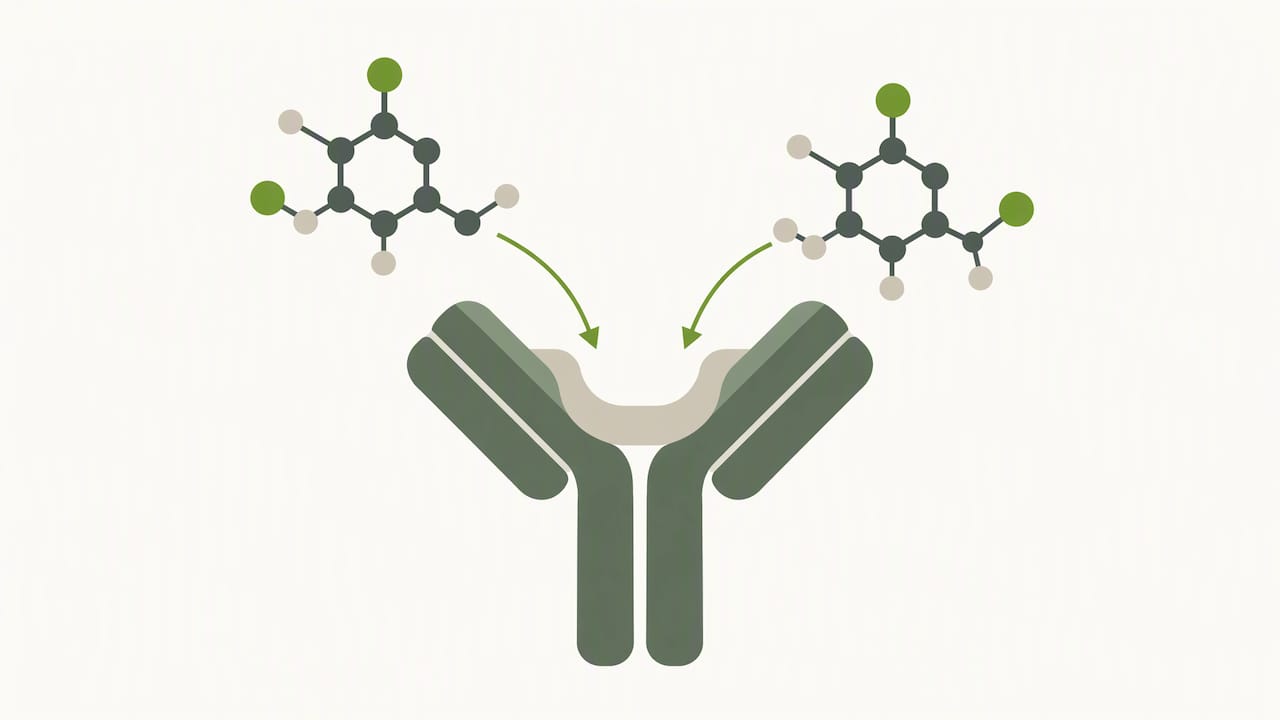
Confirmatory testing uses methods such as gas chromatography-mass spectrometry (GC-MS) or liquid chromatography-tandem mass spectrometry (LC-MS/MS). These techniques can help distinguish substances that an antibody-based screen may confuse.
A few other factors shape whether a screen throws a false flag:
- Different manufacturers use different antibody formulations, so one brand of immunoassay may react to a substance that another ignores.
- Cross-reactivity is often concentration-dependent: a compound might trigger a positive at a high dose but stay silent at a lower one.
- Labs may run specimen validity tests, checking creatinine, specific gravity, and nitrite or oxidant levels, to detect possible dilution or tampering.
This two-tier system, screen first, confirm second, exists because speed and specificity pull in opposite directions, and no single test does both well.
Common causes of false positives: medications and everyday exposures
A wide list of ordinary medications, foods, and products has been tied to false-positive immunoassay results in published case reports and clinical reviews. Knowing the usual suspects helps you figure out what documentation to pull together.
- Quinolone antibiotics: one case report found a single 400 mg ofloxacin pill was enough to trigger a false-positive opiate result on the EMIT II immunoassay.
- Certain antidepressants and antipsychotics, including quetiapine, have been reported to produce positive screens for other drug classes.
- Some prescribed medications can cross-react with immunoassays, depending on the drug and assay.
- Over-the-counter cold and allergy ingredients, including diphenhydramine, can cross-react on some immunoassay platforms.
- Some medications can cross-react on specific assay formulations.
- Poppy seed ingestion can affect urine test results, so discuss possible exposure with the Medical Review Officer.
- Some reports have implicated topical products and supplements as possible sources of unexpected results.
- Lactate dehydrogenase, oxidant activity, or nitrite in a specimen may contribute to misleading results independent of drug exposure.
A clinical review of opiate testing notes that false positives commonly trace back to cross-reactivity from drugs including quinolones, rifampin, verapamil, quetiapine, and diphenhydramine, alongside inadvertent exposures like poppy seeds, and that confirmatory GC-MS testing is what ultimately separates true positives from these false flags.
None of this means a positive screen is automatically wrong. It means a screen alone cannot tell you whether a result reflects an actual drug or an everyday medication doing exactly what it was prescribed to do.
Which drug classes are most vulnerable, and why
Not every screening category carries the same false-positive risk. Some drug classes have a long, documented history of cross-reactivity, while others rarely produce surprises.
- Some medications can cross-react with amphetamine assays, depending on the assay and substance.
- Opiate immunoassays can cross-react: ofloxacin triggering EMIT II opiate screens has been documented, and poppy seed ingestion may also affect results.
- False positives may occur on specific screening platforms, depending on the substance and assay.
- PCP screens may also produce unexpected results, depending on the assay and substances involved.
An ACMT position statement on opiate testing makes the underlying point clear: immunoassay false positives are antibody cross-reactivity events that are both assay-dependent and concentration-dependent, so consulting the laboratory or the assay’s own documentation is often the fastest way to understand an unexpected result. When a screen flags something that does not match your history, the question is rarely “is the test broken,” it is “does this particular assay react to something I’m actually taking.”
How the lab and the MRO resolve a non-negative result
A non-negative screen is not the end of the process. It sets off a defined sequence designed to separate real findings from interference.
- The initial immunoassay may flag a specimen as non-negative. The testing program can then arrange confirmatory testing, such as GC-MS or LC-MS/MS.
- The lab may also run specimen validity testing to check for possible dilution, substitution, or adulteration.
- A Medical Review Officer reviews any non-negative, adulterated, substituted, or invalid result, and in federal workplace programs is required to interview the donor to document any legitimate medical explanation, such as a current prescription.
- In many regulated programs, the donor has a defined window, commonly 72 hours from notification, to request that the split specimen be sent to a second certified laboratory for independent confirmatory testing.
- Regulatory cutoffs are built to separate incidental exposure from use: federal guidance sets the morphine confirmatory cutoff at 4,000 ng/mL, specifically to distinguish poppy seed ingestion from opioid use.
The split specimen itself is simply a backup portion of your original sample, set aside at collection so that a second lab can run its own independent confirmatory analysis if you request it.
Pro Tip: Ask the MRO directly which assay and cutoff were used on your screen, since that single detail often explains why a common medication triggered the flag.
The final outcome lands in one of a few categories: reconfirmed positive, failed to reconfirm (the result is canceled), or invalid, adulterated, or substituted, each of which carries different next steps and different implications for how the result gets reported.
What to do right after a presumptive positive
Act promptly after a non-negative result. A clear paper trail is often the difference between a quick resolution and a prolonged dispute.
- Gather prescription bottles, your current medication list, supplement labels, and any relevant medical documentation. Record the collection details and testing program contact.
- Within the window your program allows, commonly 72 hours, request split-specimen testing if it is available, notify the MRO, and hand over documentation for any prescribed medication or recent procedure that could explain the finding.
- Follow up by requesting the written lab and confirmatory reports, asking specifically which assay and cutoff were applied, and consulting a clinician or toxicologist if the result still does not line up with your history.
- If the confirmatory result still conflicts with your documentation, ask the MRO about additional testing options or your administrative appeal rights before accepting the outcome as final.
Why the gap between a screen and a confirmed result matters
Most public conversation about drug testing treats a positive result as a verdict, when it is really the first step in a two-part process built specifically because that first step is imprecise. The bigger misunderstanding is not about any one medication, it is about what “positive” is even supposed to mean at the screening stage. An immunoassay is a filter, not a verdict, and treating it otherwise causes most of the unnecessary panic and unfair outcomes connected to these programs.
A practical response is to gather your documentation, check the applicable timeline, and ask about confirmatory testing. People who understand that distinction tend to navigate a non-negative result calmly, while people who do not often accept a presumptive flag as final when they never had to.
— MIchael
Resources if you need deeper guides or ongoing support
Documenting a presumptive positive gets easier when you know exactly what to ask for and where to look next. Our guide on probation drug tests and GC/MS confirmation walks through the specific language to use when requesting confirmatory testing in a supervised setting, and it pairs well with the procedural steps above if your situation involves a court or probation program.
Beyond individual guides, our membership programs connect nursing professionals and students with educational resources and opportunities for questions that go beyond a single article. Options include:
- An Individual (student) membership for undergraduate, master’s, and pre-doctoral students at $40 per year.
- An Individual, NSNA Member discounted rate at $36 per year.
- Individual (regular), Individual (discounted), and Institutional memberships with pricing available on request.
If you want a closer look at what membership includes, visit our membership page to see current options and sign up.
This article is general information, not a substitute for advice from a qualified doctor. Consult a qualified healthcare professional about your own circumstances before acting on anything here.
FAQ
Can I fight a false positive drug test?
Yes. You have the right to request confirmatory testing and, in many regulated programs, split-specimen testing at a second certified lab within the window your program allows. Providing documentation of prescriptions or relevant medical history to the Medical Review Officer is typically how a disputed result gets resolved.
What drugs give a false positive?
Documented examples include the antibiotic ofloxacin triggering false-positive opiate results, along with certain antidepressants, decongestants like pseudoephedrine, some NSAIDs, and poppy seed ingestion. Which drugs cross-react depends heavily on the specific immunoassay platform used.
Why did my drug test come back positive but I don’t do drugs?
Immunoassay screens detect a general chemical structure shared by a class of drugs, so a prescription medication or over-the-counter product can sometimes bind to the same antibody and trigger a flag. A clinical review of opiate testing confirms this cross-reactivity is a well-documented cause of unexpected screening results, which is exactly why confirmatory testing exists.
What to do after a false positive drug test?
Immediately gather your prescriptions, medication list, and any relevant medical documentation, then contact the Medical Review Officer to request confirmatory or split-specimen testing. Follow up by asking which assay and cutoff were used, since that detail often explains the result.
Sources
- What drugs are likely to interfere with urine drug screens?
- Nida
- Toxicologic Testing for Opiates: Understanding False-Positive and False-Negative Test Results – PMC
Recommended
- Specimen, Cutoffs, and Program Rules Change Drug Detection Times
- Methods to Pass a Hair Drug Test
- Hours to 90 Days: THC Detox Timeline and 2026 Federal Cutoffs
- 1,000 to 8,000 mg Niacin Won’t Beat a Urine Drug Test, CDC Says
|
The Council for the Advancement of Nursing Science |
   |