No, there is no reliable scientific evidence that niacin helps you pass a standard urine drug test. The CDC reviewed poison-center data and found people taking large niacin doses specifically to beat these tests, with no proof it worked and documented harm instead. SAMHSA’s testing guidance confirms labs are built to catch tampering, not fooled by a vitamin flush. If you have a test coming up, skip the megadoses and follow the safer steps outlined below.
TL;DR:
- Taking high-dose niacin, even up to 8,000 milligrams, has no proven ability to alter or beat urine drug tests, according to multiple reviews.
- Standard drug screening cannot be fooled by niacin flushes or supplements because confirmatory testing detects specific drug metabolites, not skin reactions.
- Attempting to use niacin for test evasion can cause serious health problems such as liver damage, metabolic acidosis, and blood sugar swings, which may require emergency care.
- Dilution methods like water loading or adulterants such as cranberry juice and baking soda are detectable by specimen validity testing, leading to follow-up scrutiny.
- The safest way to pass a drug test remains abstinence and allowing your body to naturally clear substances, as no supplement reliably speeds up detox.
Table of Contents
- What studies, case reports, and official agencies say about niacin and drug tests
- How urine drug screening and specimen validity testing work
- Why niacin is promoted (the ‘flush’ idea) and why that isn’t detox
- Documented adverse effects and medical risks of high-dose niacin
- Common home hacks and why labs still catch them
- Safer, evidence-based steps before an upcoming urine test
- Our perspective and recommended resources
- A short note from the author
- Where to find more vetted testing guidance
- FAQ
- Sources
What studies, case reports, and official agencies say about niacin and drug tests
The clearest data point comes from the CDC’s 2006 review of regional poison-center calls, which identified people who had taken niacin doses ranging from 1,000 to 8,000 milligrams in attempts to alter urine drug tests. No scientific evidence backed the practice then, and none has emerged since. Peer-reviewed case reports add specific, documented harm on top of that finding.
- The CDC’s poison-center review found niacin doses between 1,000 and 8,000 milligrams taken for test evasion, with no evidence of effectiveness and documented adverse effects.
- A peer-reviewed case report in PMC describes a patient hospitalized with hepatotoxicity, metabolic acidosis, and hypoglycemia after taking large-dose niacin for this exact purpose.
- Clinical summaries from StatPearls and the NIH Office of Dietary Supplements describe niacin’s legitimate pharmacologic uses and the dosing ranges where adverse effects start to appear.
None of these sources, government, clinical, or peer-reviewed, support niacin as a method for masking illicit-drug metabolites in urine. The pattern across all three is consistent: documented attempts, documented harm, no documented success.
How urine drug screening and specimen validity testing work
Standard urine drug screening runs in two steps. First, an immunoassay screen flags specimens that may contain drug metabolites. Second, any positive result goes to confirmatory testing using gas chromatography or liquid chromatography paired with mass spectrometry (GC/LC-MS), which identifies the exact compound with far greater precision. This two-step process is why trying to beat the first screen rarely matters: fat-stored metabolites like THC-COOH release into urine gradually over days or weeks, and confirmatory testing is built to catch what the screen might miss.
Labs don’t just test for drugs. They also run specimen validity testing (SVT), which checks creatinine, specific gravity, pH, and oxidant levels to catch tampering.
- Creatinine and specific gravity below physiologic norms often signal dilution or overhydration, and SAMHSA’s MRO guidance lays out the exact thresholds labs use to flag it.
- Abnormal pH or oxidant levels point to adulterants added directly to the sample.
- A flagged SVT result is often treated like a refusal to test rather than a clean negative, triggering follow-up review by a Medical Review Officer.
Why niacin is promoted (the ‘flush’ idea) and why that isn’t detox
The “niacin flush” is real: it’s a histamine-driven vasodilation that makes skin turn red and feel hot, usually within 20 to 30 minutes of a dose. Online forums have long misread this physical reaction as evidence that niacin is “releasing toxins” from fat stores, including stored THC metabolites. That interpretation doesn’t hold up. Flushing is a skin-level vascular response, not a marker of accelerated drug clearance, and no controlled study has shown niacin speeds up elimination of THC or other metabolites from fat tissue in a way that would matter before a scheduled test.
- Vasodilation causes the flush, but it doesn’t mobilize or metabolize fat-bound drug compounds.
- No controlled trials exist showing niacin changes how fast common drug metabolites clear the body.
- Online guides often push single megadoses or misuse of extended-release formulations, both of which raise toxicity risk without any elimination benefit.
Pro Tip: A flush on your skin is not a sign anything is leaving your fat cells. It’s a histamine reaction, full stop.
Documented adverse effects and medical risks of high-dose niacin
Case reports tied specifically to test-evasion attempts describe a consistent pattern of harm. Patients taking large, unsupervised niacin doses have presented with hepatotoxicity, metabolic acidosis, and hypoglycemia severe enough to require hospital care. Other reported effects include tachycardia and swings between high and low blood glucose, depending on the dose and the individual’s metabolic state.
- Hepatotoxicity (liver injury) has shown up in patients taking niacin at doses far above typical supplement use.
- Metabolic acidosis and hypoglycemia have required emergency intervention in documented cases.
- Tachycardia and glucose instability are additional risks flagged in clinical summaries of niacin overdose.
The NIH Office of Dietary Supplements notes that even legitimate pharmacologic niacin use, typically 1 to 3 grams a day for cholesterol management, requires monitoring of liver enzymes and blood chemistry under medical supervision. Taking that same range or higher without supervision, in a single dose, and specifically to evade a test removes every safety check that makes pharmacologic niacin tolerable in a clinical setting. If you or someone you know has taken a large niacin dose and develops nausea, yellowing skin, confusion, chest pain, or a rapid heartbeat, that’s a reason to seek emergency care immediately, not to wait it out.
Common home hacks and why labs still catch them
Niacin isn’t the only method circulating online. Water loading, cranberry juice, baking soda, and synthetic urine all get pitched as ways to beat a test, each with its own flawed logic.
- Water loading dilutes urine enough to drop metabolite concentration below the screening cutoff, but it also drops creatinine and specific gravity below normal human ranges, which SVT is specifically designed to catch.
- Cranberry juice and baking soda are promoted as “cleansers” with no mechanism that affects drug metabolite concentration or SVT markers.
- Synthetic urine can pass a visual check but often fails temperature strips or detailed composition testing used in supervised collection settings.
When any of these trip SVT flags, the result isn’t usually a clean pass. It’s a dilute or substituted report, a follow-up MRO interview, and sometimes a requirement to retest under tighter observation, which is a worse outcome than the original test would have been.
Safer, evidence-based steps before an upcoming urine test
The most reliable step is also the simplest: stop using the substance in question and give your body the time its normal detection window requires. Beyond that, a few practical habits matter more than any supplement.
- Hydrate normally, not excessively. Overhydration triggers the same dilution flags discussed above.
- Keep documentation for any prescribed medications that could affect results, and be ready to share it if asked.
- Request MRO review if you believe a result is inaccurate or reflects a legitimate prescription rather than misuse.
- Seek medical care immediately if you’ve already taken high-dose niacin and are experiencing flushing with nausea, confusion, or chest pain, and tell the clinician exactly what you took.
Pro Tip: Honesty with a Medical Review Officer about prescriptions resolves far more false positives than any detox product ever will.
Our perspective and recommended resources
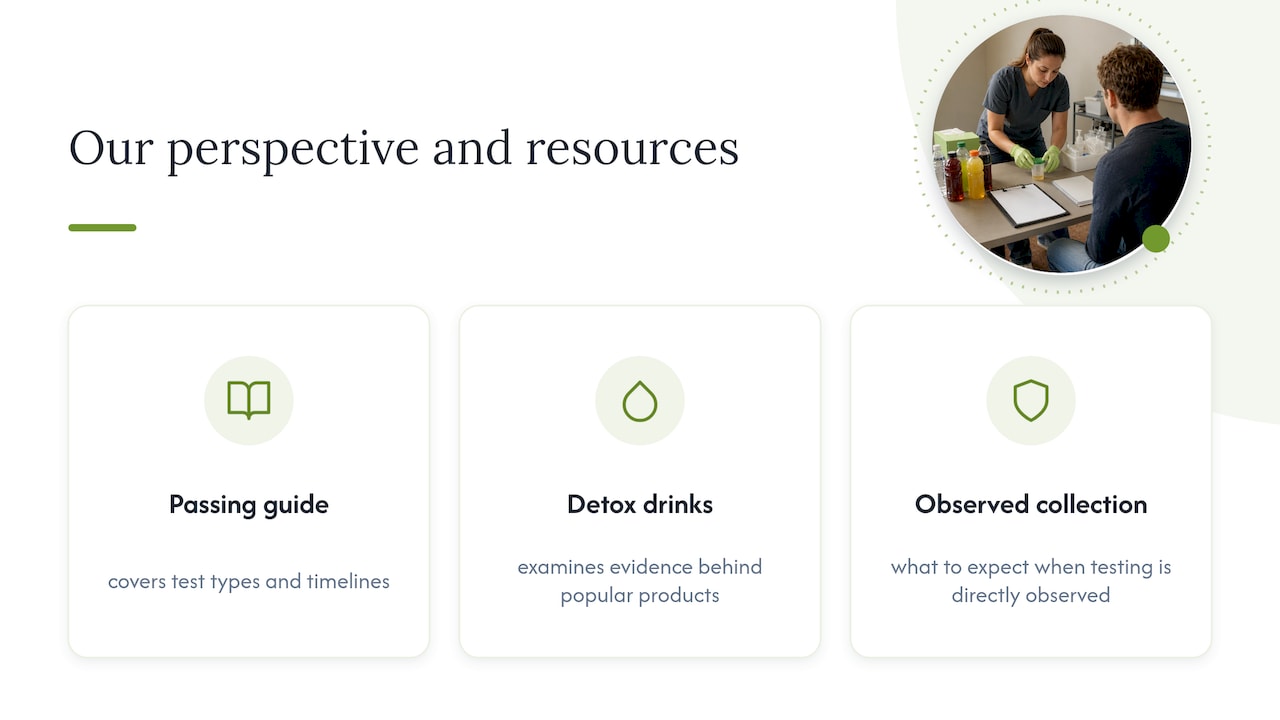
We built our drug-testing content area to separate documented testing procedure from product claims and forum folklore, because the gap between the two is where most people get hurt. Readers researching an upcoming test deserve clear explanations of how labs actually work, not repackaged myths.
For procedural detail beyond what fits here, our complete guide to passing a drug test covers test types and timelines, our breakdown of detox drinks looks at the evidence behind another popular product category, and our review of supervised urine collection explains what to expect when a test is directly observed.
A short note from the author
I’ve read enough forum threads promising a “clean” test from a bottle of niacin to know how tempting the shortcut sounds when a deadline is close. The case reports tell a different story: hospitalizations, not clean results. If a test is worrying you, put your energy into documented, low-risk steps instead of a supplement megadose.
— MIchael
Where to find more vetted testing guidance
If you want more than a single article’s worth of detail, we keep a growing library of procedural guides built around how testing actually works rather than what gets pitched in forum comments.
- Our guide to passing a drug test walks through test types, timelines, and documentation steps in full.
- Our review of hair testing methods is useful if you’re facing a different test type with a longer detection window.
- Nursing students and professionals who want ongoing access to deeper procedural updates can check our membership options, which include various pricing tiers.
If you’re weighing your options before a scheduled test, start with the free guides linked above, and consider becoming a member if you want continued access as our resources expand.
This article is general information, not a substitute for advice from a qualified doctor. Consult a qualified healthcare professional about your own circumstances before acting on anything here.
FAQ
What supplements can cause a false positive drug test?
Certain over-the-counter supplements and medications have been linked to false positives on immunoassay screens, including some cold medicines and NSAIDs, though niacin itself is not documented as a cause. Any unexpected positive result should go through confirmatory GC/LC-MS testing and MRO review rather than being treated as final.
How do you prevent a positive drug test from urine?
The only reliable method is stopping substance use long enough for your body to clear it naturally, since detection windows vary by substance and frequency of use. Attempts to dilute or adulterate a sample are flagged by specimen validity testing and typically lead to follow-up scrutiny rather than a passing result.
What drug test is hardest to pass?
Hair follicle testing is generally considered the most difficult to influence because it reflects a much longer detection window than urine or saliva, and our guide to hair testing methods covers how that process works in detail. Urine and saliva tests have shorter windows but still rely on confirmatory testing that catches most tampering attempts.
Does niacin help get nicotine out of your system?
There’s no controlled research showing niacin accelerates nicotine or cotinine clearance from the body. The physical flush some people experience is a histamine-driven skin reaction, not evidence of faster elimination of nicotine metabolites.
Sources
- Use of Niacin in Attempts to Defeat Urine Drug Testing — Five States, January–September 2006
- Beating the urine drug test – a case report on niacin toxicity (PMC)
- 2024 Medical Review Officer (MRO) Case Studies – Urine
- Niacin (NIH Office of Dietary Supplements) factsheet
Recommended
- Certo Detox To Pass A Drug Test: What you should know
- How to Pass a Drug Test: A Complete and Detailed Guide
- Methods to Pass a Hair Drug Test
- Best Detox Drinks for THC Drug Tests: A Comprehensive Guide
|
The Council for the Advancement of Nursing Science |
   |